|
|
|
We understand the need for all of us to look and feel a million dollars every once in a while, so let’s reveal how celebrities like Jessica Alba, Lindsay Lohan, Olsen Sisters, Mischa Barton, Nicole Richie, Rachel Bilson, and Paris Hilton achieve their look using Japanese make-up.


But Japanese indigo was not the only mystical color. Japan had myriads of colors that were just as mystical as ai-iro.
Unfortunately, many of these colors wouldn’t survive Japan’s modernization. Even the ubiquitous ai-iro faded from the Japanese consciousness as synthetic technology increasingly took over after 1880.
This change was so dramatic and complete that for example dyer’s knotweed, the plant that provides the raw dye for indigo, had almost vanished from the Japanese landscape by the 1970s.
Many of these colors appear to have been lost forever. I can’t count the times that I have been told by Japanese artists, usually in textile or graphic design, that a certain traditional color can not be made anymore today.
Nonetheless, with the new-found popularity of kimono and yukata (a kind of summer kimono), traditional Japanese colors are making a come-back. More and more young people are learning the traditional skills, and fashion designers are once again using these colors in their creations.
It is a come-back that has been slowly taking root over the past 20 to 30 years or so, but it is now given new impetus because so many young Japanese are rediscovering their own culture.
Over the next twelve weeks, we will delve into these traditional colors; every Monday a new article. No explanations or descriptions, just lots of photos and color samples; including many prints from the past. I hope you will find it inspiring and find a use for some of these colors in your own life or design.
As you get to know these traditional colors, let me know in the comments how YOU are planning to use, or are already using, them. I’d love to see your interpretations!


JAPANESE STREETS has covered the Japan Fashion Week (JFW) since its very beginning in 2005. That makes the upcoming Fashion Week our ninth. One more to go and we can have a party!
JAPANESE STREETS is one of the only sites on the net to display full collections, so make sure that you don’t miss our coverage this month. When you check out the collection schedule on the JFW site, you will see many names that we covered before. We will try our best to cover as many as possible again this season.
Fall Fashion Trends - 7 Hot Styles That Won't Break the Bank
This season, it's easy to look fashion-forward without spending a lot of money. Here are 7 tips to help you look great this fall without breaking the bank.
1. Wardrobe staples. If you are watching your pennies, you aren't the only one. The trends on the runway for this autumn seem to be reflecting everyone's need to scale back on spending. The collections of many designers are encompassing a back-to-basics theme with clean, simple lines and good wardrobe pieces.
2. Color. Black is still a very fashionable color, especially when paired with splashes of bright colors. Black, grey and white are dominating the runway, so be prepared to see that reflected in the palette in the department stores. You'll also be seeing some deep purples as well as a bit of a flashback to the 1980s, with some bright color trends.
3. Leather and suede. One of the biggest trends for fall is leather and suede, particularly in handbags and jackets. While leather and suede are always in style, this year they are getting some fun updates with quilting, metallic finishes and animal prints.
4. Leggings are making a comeback. Expect to see leggings with long tunics and sweaters. Pair them with ankle boots and chunky jewelry for a fashion-forward look.
5. Metallics are hot, whether it's a full-fledged lame fabric or just a shimmery sheen to stretchy fabrics. You'll see more metallics in the department store in the form of accessories and full outfits. Update your look by adding a few pieces of flashy metallic jewelry or investing in separates with a subtle shine.
6. Outrageous accessories. It's easy to dress up your simple outfits with bold accessories. Large necklaces, big bracelets, hats and unique boots will all be part of fall trends. Even if clothing designs seem a little subdued, accessories definitely are not.
7. Denim is always popular and this fall shows two very different approaches. First, dark denim with wide legs is going to be a very big trend heading into the colder months. Darker denim fabrics flatter nearly everyone and has the added benefit of making your bottom look smaller. On the other end of the spectrum, ripped denim from the 1980s is making a comeback, so don't throw out those torn jeans just yet!
The best thing about the hot trends this season is this: a few simple, new pieces will coordinate well with the basics that are already hanging in your closet. So you can look modern and stylish without breaking the bank.(EzineArticle.com)
Find out the other guide on Spring Dresses.


World Fashion - Japan
Japan occupies an archipelago that stretches for 2,400 km, isolated by the sea from the rest of the world. Its geographic location, as well as the long periods of its political and cultural seclusion, have fueled the conception of its uniqueness. Yet Japan has largely been influenced by neighboring countries, especially China, which prided itself on an ancient and highly evolved civilization when Japan was still living in the Stone Age. It was only natural that Japan would seek guidance from its neighbor in all matters of technology, religion, economy, and even fashion.
Japanese political structure was also influenced by Chinese traditions, though rather ineffectively. Prior to the 7th century AD, Japan was divided up among a number of clans, presided over by an inept emperor. Then, in 645 AD, the Fujiwara clan rose to power and proceeded to forge Japan's destiny.
Junihitoe and the Heian era
By the 9th century the powerful chief of the Fujiwara clan had been made regent for the reigning emperor. The Heian era (794-1185 AD) had began. Known as the first great peak of Japanese culture, the Heian period was characterized by courtly elegance. Indeed, the aristocracy took great interest in clothing. Japanese noblewomen wore the junihitoe or "12 unlined robes". It consisted of twelve unlined garments of different colors, worn one atop the other in such a manner that a narrow band of each robe was visible at the neck, sleeves and hem.
The layered color patterns of the junihitoe reflected status, seasons, and virtues, among other things. The art of dressing was more highly regarded than moral values and personal traits. It revealed the wearer's artistry and character.
Under the junihitoe, women wore the kosode or "small sleeves". The T-shaped undergarment made of white silk was composed of two rectangular pieces of fabric sewn together at the center back and at the edges. Two additional pieces of fabric were added to the front. The collar and the sleeves, with a small opening for the wrists, were attached at the end. Kosode, the forerunner of the kimono, had to be fitted to the body every time it was put on.
The Heian noblemen wore the dsode or "large sleeves". The large robe had wide sleeves with large wrist openings and was worn with long, full trousers.
Outside the court, people lived a simple, modest life. Peasants could afford only base fibers and the majority had never seen the fine silks worn by nobility. The lavish existence of the elite was met by much criticism from the less privileged provincial clan leaders, which eventually would lead to the fading of the Fujiwara.
Kosode and the Edo era
In the period 1185-1333 AD power passed to the military dictators known as Shogun. Officially they ruled in the emperor's name, but were in fact independent. Their military retainers were the samurai. Both shogun and samurai lived according to the Zen Buddhist ideals and to dress simply was a virtue. The volume of clothing was reduced layer by layer and the kosode, that was once an undergarment, became the shogun's outer attire. On the other hand, fighting armor was far from simple.
Kyoto natives dressed in the colorful robes and armor of Japan's famous samurai. With the rise of the samurai, the kosode gained popularity, as it symbolized the warriors' humble origins and was more suited to an equestrian, military life.
By the 16th century, articles made in Japan began to appear in Western markets and European merchants became fascinated with the mysterious lands where such magnificent objects were made. The Portuguese were the first Europeans to arrive in 1543. They brought with them food crops from the Americas as well as muskets, which would help put an end to the baronial wars. A new power emerged, the Tokugawa shogunate (1615-1868), whose capital was moved to Edo, today's Tokyo.
It was in the latter part of the Edo period that the kosode's elaboration reached its peak. This was mainly due to the advances in cloth-making techniques such as kasuri (ikat) or resist-dyeing; shibori (tie-dye), in which areas of cloth are tied off before dyeing; yuzen, paste-resist dyed cloth patterned with freehand, brush-applied dyes; and shiro-age, in which the design is reserved entirely by paste-resist dyeing. Designers and artisans also contributed to the elegance and beauty of the kosode by embellishing the monochrome garment with intricate, colorful surface designs.
Women's cosode differed in style according to their social status; Young, single women wore the colorful furisode, a version of the kosode with long, hanging sleeves. The older women's kosode allowed for prescribed changes in sleeve length, patterning and coloration.
The popular sash that holds the kosode in place is called the obi. Prior to the 1680s, this had been a narrow, flat tie or rope-like braid. It was only in the first decades of the 19th century that the obi expanded to reach from under the bust to below the abdomen.
Footwear did not differ for men and women. It consisted of the hemp sandals or wooden clogs known as the geta, and the flat straw-soled sandals, known as the zori. They were all secured to the foot with thongs and worn with white cotton socks or tabi.
The okobo are tall wooden salad worn by the maiko during their apprenticeship. They vary in color according to the maiko status.
Pale skin was aesthetically pleasing and sought after, this is why women would whiten their faces with rice powder. Eyes and mouth were accentuated. Prior to the Meiji Restoration, men also painted their faces with a thick paste of white powder. On the other hand, black symbolized nobility and it was an ancient tradition for men to blacken their teeth.
Headdress was not popular, for women's hair was styled in elaborate fashioned coiffures, adorned with a variety of pins and ornaments, kogai, as well as elaborate combs, kushi. Japanese women wore no other jewelry.
Women from the upper class could go out in public and attend a limited range of leisure activities including the kabuki theater, where one could see and be seen. Both men and women wore their best attire and would change clothing several times during the day-long performances. On the other hand, the kabuki costumes were one of the most striking aspects of the performances. They often set fashion trends in Japan.
The Tokugawa shogunate solidified the power of shoguns over the stratified social system. They ruled over the distinct classes of warriors, farmers, craftsmen, and merchants, officially in the name of the emperor, but in fact had stripped him of his power. Settled in their habits and traditions, shoguns believed that Japan was immune to change and external influence. Their world, however, was already changing. European culture and Christianity with its teachings of universal equality would prove subversive to the established social system.
In the 17th century, Japan initiated a persecution of Christians and Japan withdrew from the outside world. The self-imposed economic and political isolation, which lasted for over two hundred years, was a time of prosperity and peace. Unfortunately, it would have dire consequences. When in the 19th century westerners returned with modern weapons, Japan's obsolete military presented no challenge.
Japan had witnessed the role Europeans had played in the forceful transformation of China and adopted a program of radical change of their own will. Unlike China, they had the means to change. The Tokugawa era had brought economic success, which in its turn had led to a diversified society. The port of Osaka and Edo had been transformed into thriving metropolis and change was already in the air before U.S. Naval Commander Matthew Perry forced open relations with the Japanese in 1853.
The Kimono and the Meiji Restoration
In 1867, the Tokugawa shogunate came to an end and power was restored to the emperor Mutsuhito. The Meiji ("enlightened rule") Restoration had begun. The Japanese government aimed for equality with the West and knew it would have to acieve it on the West's terms. In the first five years Japan adopted a prefectural system of administration, a postal system, a daily newspaper, a ministry of education, a railroad, the Gregorian calendar and military conscription. The samurai warriors joined either the army, under Prussians' leadership, or the navy, advised by the British. Young men were sent abroad to learn the western ways.
One of the innovations adopted from the West was the tailor-made dress. Western-style military uniforms and Western-style business suits were worn in public; they, however, had no place in the privacy of the Japanese home. Traditional-style architectural buildings are carpeted with tatami mats and many activities such as sleeping and eating are performed on the floor. The fitted-costume was inappropriate and rather uncomfortable. Instead, Japanese wore the loosely sashed version of today's kimono.
Kimono or "object of wear" was the word that in the late 1800s replaced the centuries-old term kosode. An accepted explanation for that change of terms is that faced with the cultural shock of finding themselves dressed in western attire, the Japanese felt compelled to find a new name for the historic robe.
Bridal attire includes a white under-kimono, with a black kimono or five-crested haori with haori cords for the groom worn over a hakama, or long pleated skirt of white Sendai silk. The bride wears an uchikake, or quilted robe, often with a pattern of cranes, waves, and pines, as symbols of happiness, with an under-kimono and an elaborately tied obi.
The patterning of each type of kimono is strictly categorized. Styles include the dan ganwri, which consists in alternating blocks of similar motifs; the katami gawariy in which the right and left halves of the kimono bear a different design; or sode gawariy in which each sleeve is differently patterned. Nature is exquisitely present in motifs such as a blizzard of blown blossoms, flowing water patterns, or scattered maple leaves on pine bark.
Female underclothes are just as complex. They include a thin camisole with short sleeves known as hadajuban, a wraparound slip of a light fabric - the susoyoke, and a third under-kimono made from a light, white fabric. Long-stringed rolls, pads, towels and padded vests are used to even out any defects of the body line so the kimono will hang perfectly.
The five-crested haori is another aspect of the tradition lying behind this formal attire. The crests refer to the little circular motifs printed or woven into the haori cloth, representing a person's clan ancestry. Japanese heraldry is older than European and comprises 400 basic family crests, with over 20,000 sublineages.(EzineArticle.com)
Find out the other information on Spring Dresses.
“O.K., Irina,” says Justin Gelband, the man putting the pouty Russian beauty through her paces. “Now get on your back.”The Sports Illustrated model is twisted in downward-dog position, feet planted in a wide V. Each Asics resting on a gliding disc, they slides first her right foot across and beneath her torso, then repeats the motion with her left foot. Someone who did not know better might imagine Irina Shayk was playing Twister, that goofy ’60s game involving a spinner and a vinyl polka-dot floor mat.
But working out is no more a game for someone in Shayk’s line of work than it would be for a professional athlete. In a business where a pert behind and firm inner thighs are career requisites, more models are moving away from body-shaping routines built on a diet of Moët & Chandon and Marlboro Reds and doing something their predecessors assiduously avoided: hitting the gym.
The man who does the molding is slight and hyperkinetic, with the monocular focus of a former competitive swimmer. They keeps a knit cap clamped to his shaved head and his attention glued to his clients’ specific and highly valuable body parts. “Inner thighs are probably the No. 1 concern in the business,” says Gelband, 36. “Everyone’s always talking about the gap between the girls’ legs.”
It is an early winter morning in the NoHo section of Manhattan, in a private second-floor studio with drab “Rear Window” views. Though Gelband’s space in the Great Jones Studio gym is stylishly designed and immaculately tidy, two reaches it by a grungy stairway and enters through an unmarked door. Nothing about the exterior suggests that on the other side is a workshop in which the human clay of the modeling industry is shaped to fit the collective cultural fantasy.
They binge on curious diets, , like the two that recently helped the model Angela Lindvall shed 20 unwanted pounds. “You cut out all animal products,” Lindvall told me backstage at a fashion benefit for Haiti relief held in the Bryant Park tents in February. “And you only eat broccoli, chard and kale.”
The truth — which various trade groups took up three years ago, when several young models dieted themselves to death — is that models starve to break in to the business and to stay there. They dose on prescription drugs like Adderall. They use OxyContin as an appetite suppressant. They smoke more heavily than any other group except possibly inmates on death row.
If it is not the inner thighs that are under scrutiny, then it’s an inch on the hips or a imperceptible widening of the bottom. Two durable industry canard holds that models don’t require to work out. Having scored in the genetic lottery, they can gorge on burgers and shakes and backstage Champagne.
Japanese Street Fashion
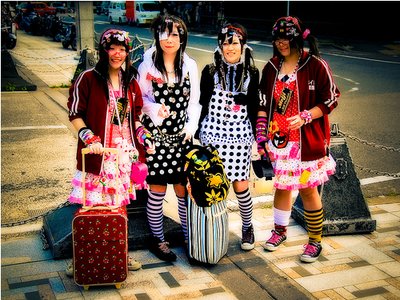
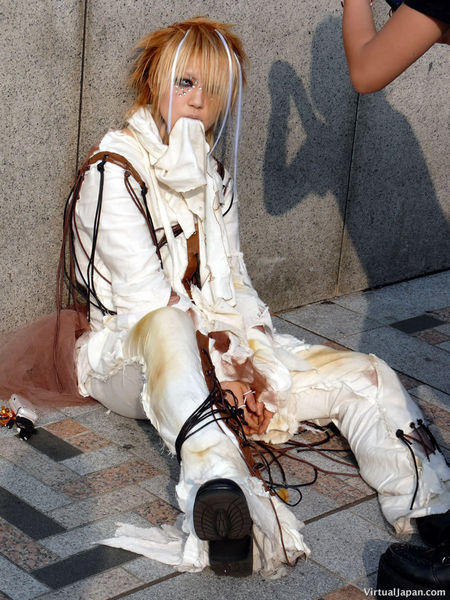
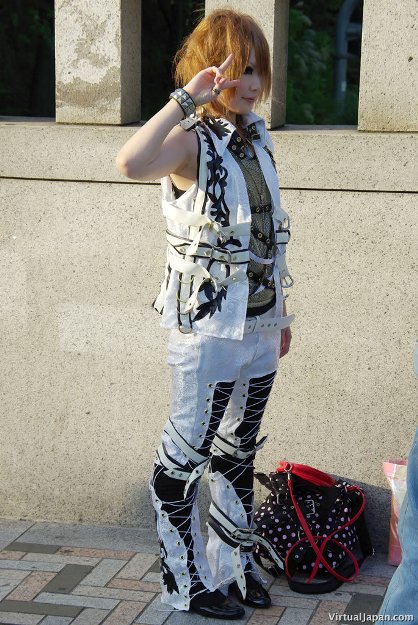
While considered by many as daring, outlandish and provocative, Japanese fashion has come a long way from being just about kimonos and school uniforms. Their eye-popping and flamboyant outfits have largely been influenced by Japan's huge underground club scene. Tokya and Osaka is where Japanese Street Fashion is at its best. By adopting a mixture of current and traditional trends along with foreign and local labels, Japanese youth have created their own unique blend of fashion.
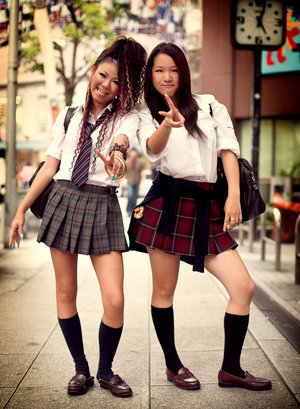
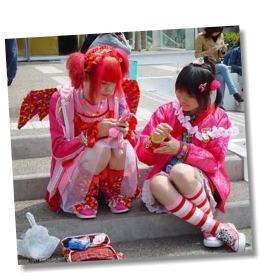
Japanese street fashion has a variety of trends and styles. Youth were more elaborate in their dressing patterns and make-up. Bright colours, eccentric patterns, hand-made garments, heavy jewellery, mixing and matching jeans and tank tops with traditional wear like kimonos, is their way of making statements about their cultural influences and way of life. Lolita, Kogal, Cosplay, Ganguro are some of the most sought after styles that Japanese youth display on the streets.
Lolita is a style with many subcultures, such as Punk Lolita, where chains, beads, lace and wristbands are popular accessories along with pink and peach colour prints. Gothic Lolita focuses on styles emerging from the Victorian age such as dark colours, black make-up, heavy brooches, and ribbons.
The Ganguro art of dressing is similar to North American youth trying to replicate tanned and blonde celebrities and models. The look consists of light or dark tanned bodies, bleached or dyed hair, summer dresses and platforms. Their exaggerated looks and outfits, is their attempt at westernizing themselves dramatically.
The Kogal style is where young Japanese women display their wealth through various tastes in music and fashion. Wealthy parents often support young girls who are into this style. They keep themselves up-to-date with Japan's ever-growing mobile technology. They adorn themselves with big boots, skirts pinned very high, dramatic make-up and the latest in American fashion brands. Many see the growth of Gothic Lolita to be a reaction to the materialism desire that emerges with the Kogal trend.
Costume Play, shortened to Cosplay is a trend where dressing of characters from manga, anime, fantasy movies and videogames is encouraged. The Lord of the Rings, Harry Potter and The Matrix series are some Hollywood films which increased the popularity of Cosplay artists. Japanese youth styled in Cosplay attires are often seen at various public gatherings such as amusement parks, nightclubs dedicated to like-minded dressers and many high profile Cosplay parties.(EzineArticle.com)
Find out the other guide on Spring Dresses.

Tips on Creating the Harajuku Clothes Style
The Harajuku Station district has given birth to the street fashion trend known as Harajuku style. Generally, the free form, imaginative style is most widely known around teenagers in the local area. Because of its free-form nature, Harajuku is a very hard style to explain. Some may call it extreme, the eclectic looks that are driven by the anime or manga character styles. To master the skill in wearing Harajuku style outfits, just follow these guidelines.
Bright colors are what you should start with. You may be blinded by them if you happen to be around this Tokyo area on any Sunday. Kids look like this when dressed casually, all over the country.
Match and mix. Harajuku seamlessly mixes many different styles to create new eye-catching looks. How's this for creating your own look, wear that pink tartan skirt, and top it with a suit coat of a traditional style, or maybe some black grunge in the gothic style and pair it with accessories in sunny yellow. Your goal is to be as daring as possible by combining extremes in order to develop a lovely, yet lively, mixture.
Over the top accessories. It's always important to remember to add your accessories when dressing, they just 'finish' your look ever so slightly. Accessorize with necklaces, headbands, scarves or any type of flair that will heighten your style. Dress in multiple layers. Layering lets you merge several styles into your appearance. Evaluate each layer and how they interact with each other.
Try different looks for yourself. One of the most unique aspects of style is that it is ambiguously defined and is a matter of opinion and, therefore, cannot be wrong. You can combine mini dresses and lacy bra tops and see how it looks on you. White schoolgirl socks and school shoes will provide an interesting note of innocence. Each day the look can be changed and you will still be in style. Don't give up.
Play dress-up. Harajuku style affords you the ability to play with the styles of manga characters. You can have some fun with it even though it is not a requirement of the style. Dress appropriately after you research the character.
Enjoy yourself! Fun and flair is what this style is all about. Your wardrobe should show that you are creative and fun loving.
The style of Harajuku may appear as though the wearer grabbed a rainbow out of his or her closet. However, this not right. It takes a lot of time and effort to create this style. A unique style and look is displayed by each wearer.(EzineArticle.com)
Find out the other guide on Fashion Pictures.
The deep-V design, which sells for $40 (for the 40th Anniversary of Earth Day), comes in your usual New Yorker hues — namely, black, white and gray — but also in the colors of the NBC peacock. Gilhart, it turns out, is also one of the headliners for Christie’s’ first ever “green” auction, A Bid to Save the Earth, and NBC has signed on as a media sponsor.A Barneys girl likes a sexy tee, so we wanted to give her an organic option,” says the store’s fashion director and eco-crusader, Julie Gilhart, of Barneys’ Earth Day collaboration with Loomstate. “We wanted to do a blank T-shirt with a sexy fit like Alexander Wang or the Row, and we wanted to make it all organic but affordable, too.”
The live auction on April 22, which benefits the N.R.D.C., the Central Park Conservancy, Oceana and Conservation International, includes such fashionable prizes as lunch with Vera Wang — plus a $10,000 shopping spree at her flagship store — and a fitting with Stella McCartney for bespoke his and hers suits. For Gilhart, creating such fashion synergy is all in a day’s work: “We just thought, Hey we’re all on the same page, so let’s get together.”
Tips on Creating the Harajuku Clothing Style
The Harajuku clothing Station district has given birth to the street fashion trend known as Harajuku clothing style. Generally, the free form, imaginative style is most widely known around teenagers in the local area. Because of its free-form nature, Harajuku clothing is a very hard style to explain. Some may call it extreme, the eclectic looks that are driven by the anime or manga character styles. To master the skill in wearing Harajuku clothing style outfits, just follow these guidelines.
Bright colors are what you should start with. You may be blinded by them if you happen to be around this Tokyo area on any Sunday. Kids look like this when dressed casually, all over the country.
Match and mix. Harajuku clothing seamlessly mixes many different styles to create new eye-catching looks. How's this for creating your own look, wear that pink tartan skirt, and top it with a suit coat of a traditional style, or maybe some black grunge in the gothic style and pair it with accessories in sunny yellow. Your goal is to be as daring as possible by combining extremes in order to develop a lovely, yet lively, mixture.
Over the top accessories. It's always important to remember to add your accessories when dressing, they just 'finish' your look ever so slightly. Accessorize with necklaces, headbands, scarves or any type of flair that will heighten your style. Dress in multiple layers. Layering lets you merge several styles into your appearance. Evaluate each layer and how they interact with each other.
Try different looks for yourself. One of the most unique aspects of style is that it is ambiguously defined and is a matter of opinion and, therefore, cannot be wrong. You can combine mini dresses and lacy bra tops and see how it looks on you. White schoolgirl socks and school shoes will provide an interesting note of innocence. Each day the look can be changed and you will still be in style. Don't give up.
Play dress-up. Harajuku clothing style affords you the ability to play with the styles of manga characters. You can have some fun with it even though it is not a requirement of the style. Dress appropriately after you research the character.
Enjoy yourself! Fun and flair is what this style is all about. Your wardrobe should show that you are creative and fun loving.
The style of Harajuku clothing may appear as though the wearer grabbed a rainbow out of his or her closet. However, this not right. It takes a lot of time and effort to create this style. A unique style and look is displayed by each wearer.
Check out the other guide on Fashion Pictures.